
Critical Infrastructure

hiSky’s Satellite Network Is a Backbone of Critical Infrastructure
hiSky’s Satellite Network Is a Backbone of Critical Infrastructure
Critical infrastructure, encompassing power grids, water treatment plants, transportation systems, and more, is the lifeblood of modern societies. Its resilience and efficiency are paramount to economic growth and public safety. IoT in infrastructure management has revolutionized how we oversee and maintain these vital systems. However, these systems are increasingly vulnerable to disruptions, both natural and man-made.
- Cyberattacks and physical sabotage pose significant threats to operational continuity. The consequences of such disruptions can be catastrophic, leading to power outages, water shortages, and transportation gridlock. To mitigate these risks, robust and redundant communication networks are essential.
- Natural disasters like hurricanes, earthquakes, and floods can cause widespread damage to infrastructure.
- Mistakes by operators or maintenance personnel can lead to accidents and failures.
The Role of IoT in Infrastructure Management
IoT in infrastructure management has emerged as a powerful tool for managing critical infrastructure. IoT enables real-time monitoring, data analysis, and remote control by connecting physical assets to digital platforms.
With their ability to collect data on various parameters such as gas, PH for acidity, temperature, and flow rate, IoT devices can potentially prevent significant problems. This data can be analysed to identify potential issues before they escalate into major problems. Implementing predictive maintenance, a key feature of IoT can be a game-changer in optimizing asset lifespan and reducing downtime, instilling a sense of confidence in the technology’s long-term benefits.
However, the effectiveness of IoT solutions depends on reliable connectivity, especially in remote or challenging environments.


A Game-Changer for Critical Infrastructure
With its ability to provide uninterrupted coverage, Satellite IoT offers a compelling solution to the connectivity challenges critical infrastructure faces. Unlike terrestrial networks exposed to natural disasters, satellite networks stand firm, ensuring continuous connectivity, and are used as one of several communication methods backing up sites.
hiSky’s satellite IoT network is specifically designed for critical infrastructure, offering tailored solutions to meet each customer’s unique needs. The network’s hybrid satellite-cellular connectivity ensures maximum uptime by automatically switching between networks as needed.
By leveraging satellite IoT, organizations can achieve greater visibility into their operations, improve decision-making, and enhance overall resilience.
hiSky’s Satellite IoT Network: A Powerful Solution
hiSky’s satellite IoT network stands out for its agility and reliability. Key features include:
- Tailored solutions: The network can be customized to meet the specific requirements of different critical infrastructure sectors.
- Multi-constellation compatibility: hiSky’s SmartelliteTM terminals can operate over multiple satellite constellations, providing redundancy and flexibility.
- Hybrid connectivity: The combination of satellite and cellular connectivity ensures uninterrupted communication.
- Network Resilience: The network’s core infrastructure can be based on international teleports, guaranteeing high availability even in times of regional crisis.
- Compact and rugged terminals: flat-panel, easy-to-deploy terminals, suitable for harsh environments.
- Cost-effective pricing: Designed for mass deployment, hiSky is designed for deployment of large-scale IoT networks.
Overcoming the Challenges of Critical Infrastructure Management
The deployment of many IoT sensors across critical infrastructure presents significant challenges. hiSky’s satellite IoT network addresses these challenges by offering:
- Scalability: The network can support the deployment of millions of sensors
- Low-Cost: The combination of low-cost terminals and data plans makes it economically viable.

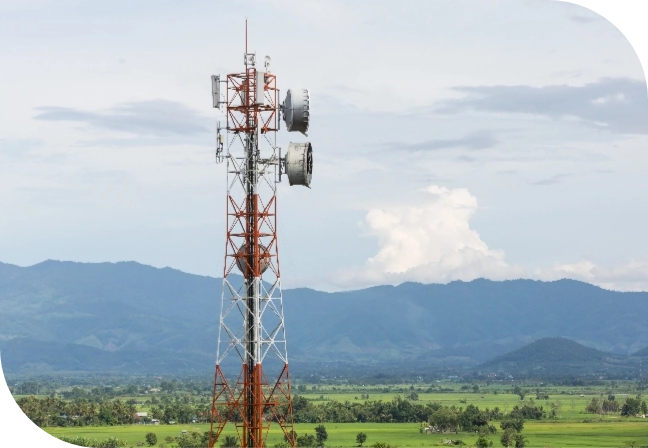
Satellite Connectivity for Effective Key System Management
hiSky’s satellite IoT network makes managing remote critical systems more straightforward. Good examples of how organizations can significantly enhance key processes through satellite IoT are tower management and SCADA systems.
- Tower management: By deploying IoT devices on towers, operators can monitor structural integrity, environmental conditions, and equipment performance in real-time. This data can be used to optimize maintenance schedules, prevent failures, and improve overall tower efficiency.
- SCADA systems: Satellite IoT can provide reliable connectivity for remote telemetry units, enabling efficient SCADA data acquisition and transmission. This data can be integrated into SCADA systems to monitor and control critical infrastructure assets.
By leveraging IoT in infrastructure management, organizations can achieve greater visibility into their operations, improve decision-making, and enhance overall resilience. hiSky’s satellite IoT network is specifically designed to meet the challenges of remote infrastructure management, offering a robust and reliable solution for critical infrastructure operators.
Want to learn more? Contact us
Q&A
1. Why do Governments allocate budgets to support redundancy and recovery efforts for critical sites?
Investing in satellite communication can be a strategic move to enhance national security and economic stability. When coupled with satellite technology, IoT in infrastructure management offers a powerful combination for building resilient and efficient critical systems.
2. How prevalent are cyberattacks on critical infrastructure?
Cyberattacks on critical infrastructure are a growing concern. In 2021, over 2,200 reported cyber incidents were affecting essential infrastructure in the United States. The energy sector is particularly vulnerable, with a significant increase in ransomware attacks targeting power grids and pipelines.
3. What is the economic impact of critical infrastructure failures?
The economic impact of critical infrastructure failures can be substantial. For example, a significant power outage in the northeastern United States in 2003 caused an estimated $10 billion in economic losses. Additionally, disruptions to critical infrastructure can lead to supply chain disruptions, job losses, and decreased investor confidence.

Thank you!
Your application has been registered @hiSky.
Here is the link to download the brochure.
