
Wildlife Monitoring
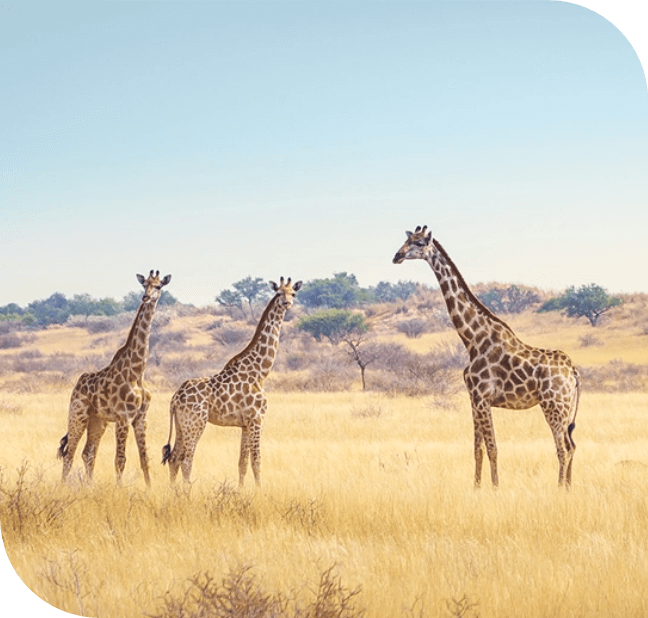
Innovative Satellite Network Empowering Wildlife Monitoring
Innovative Satellite Network
Empowering Wildlife Monitoring
Traditional environmental monitoring methods often struggle in remote wilderness areas, hindering effective wildlife management. This is where hiSky’s innovative satellite network comes in, offering a powerful tool for wildlife management services and researchers.
hiSky’s Network: Revolutionizing Wildlife Monitoring
hiSky leverages satellite communication to create a robust, cost-effective network designed explicitly for wildlife monitoring applications. The Smartellite™ terminals connect seamlessly with various sensors for a comprehensive wildlife monitoring network. GPS tracking collars, fixed thermal cameras, and IoT-enabled drones are just some examples of those sensors. Animal monitoring devices are transformed into data points on a secure and private network. This enables real-time tracking and data collection from even the most far-flung corners of the globe, overcoming the limitations of traditional terrestrial infrastructure.
Wildlife Conservation Enabled By IoT Developments:
- Fight Poaching: Alarming against thwarts illegal activity, protecting endangered animals.
- Monitor Species: Data collected on movements, migrations, and habitat is used to better understand and safeguard threatened wildlife.
- Safeguard Animal Health: Monitor vitals for early detection of illness, enabling timely veterinary intervention.
- Protect Habitats: Monitor environmental threats like temperature changes and water quality to safeguard critical ecosystems.


Building Large-Scale Wildlife Monitoring Networks
Unlike traditional satellite communication solutions that can be cost-prohibitive for large-scale projects, hiSky offers a unique approach that makes wildlife monitoring financially viable.
Here’s how hiSky achieves this affordability:
- TDMA-Based Shared Channel: hiSky’s network utilizes a clever approach of a window-based system that allocates specific time slots to each device, preventing collisions and ensuring smooth data flow. Imagine a highway with designated time windows for different animal tracking devices to transmit their data. The shared channel approach allows hiSky to efficiently maximize network capacity and minimize costs associated with dedicated bandwidth for each device.
- Dedicated Channel Option for Critical Situations: While the shared channel is ideal for most wildlife data transmission, we understand the need for occasional high-bandwidth communication. Our network offers the flexibility to switch to a dedicated channel for situations demanding uninterrupted data flow. This could be crucial for:
- Initiating alarms in response to poaching activity or other urgent threats.
- Transmitting high-resolution images or sensor data requires more bandwidth than is typically needed for location updates.
- Facilitating voice calls (VoIP) for researchers in remote locations, allowing for real-time communication and coordination.
This ability to seamlessly switch between shared and dedicated channels ensures hiSky’s network caters to the diverse needs of wildlife monitoring projects, offering both cost-efficiency and the flexibility to handle critical situations requiring uninterrupted data transmission.


The Rise of Satellite for Wildlife Management
The field of wildlife management is undergoing a revolution thanks to the Internet of Things (IoT). Interconnected animal tracking sensors are now enabling researchers and wildlife services to gather real-time data on animal behaviour and location. This, coupled with the growing support from many governments and wildlife organizations actively promoting the use of satellite technology for wildlife monitoring, has created a dynamic and exciting environment where hiSky stands out. With our specialized satellite IoT network, designed specifically for wildlife monitoring, we offer a powerful suite of features to enhance your wildlife management efforts, including:
- Data Collected and Shared In Real Time for Informed Wildlife Management Decisions: A multitude of animal tracking devices can be connected, collecting real-time data on animal migration patterns, habitat utilization, and population health. This data is then fed into central platforms for analysis.
- Global Coverage: Remotely located wildlife populations can now be effectively monitored. hiSky’s comprehensive reach overcomes the limitations of terrestrial infrastructure, enabling real-time data collection and offering a more complete picture of animal populations across vast areas
- Unmatched Flexibility: As the communication channel for your wildlife monitoring project, hiSky offers a dependable and adaptable solution, ensuring a solution that perfectly fits your needs.
Want to learn more? Contact us
Q&A
1. Why is wildlife monitoring promoted by many governments and organizations worldwide?
Wildlife monitoring is crucial for understanding population trends, identifying threats, and developing effective conservation strategies. For instance, in Australia, monitoring the Great Barrier Reef helps scientists track the impact of climate change on coral reefs and marine life.
2. What are some success stories in wildlife conservation through monitoring?
There are many examples. Monitoring efforts have helped recover populations of species like the California Condor and the Giant Panda. In Costa Rica, reforestation initiatives combined with wildlife monitoring have led to increased biodiversity.
3. What does the future hold for wildlife monitoring?
The future looks promising with advancements in technology and growing global awareness of conservation. We can expect to see more innovative monitoring tools and increased collaboration between scientists, policymakers, and communities. Ultimately, the goal is to ensure a healthy planet for both wildlife and humans.

Thank you!
Your application has been registered @hiSky.
Here is the link to download the brochure.
